Device IntelligenceREVIEW / 2026

THE 2026 PLATFORM COMPARISON

Best device
intelligence
platforms.

Compare the best device intelligence platforms and alternatives in 2026: identity persistence, risk evidence, account context and access. Twelve products assessed through the same 39 criteria in six categories.

Identity Is this a returning device?Risk What does this visit show?Context How are accounts connected?

01 / THE COMPARISON

One shortlist.
Different evidence.

A browser identifier, a matching-confidence value and an account-risk assessment answer different questions. Compare the supported output and workflow before treating them as equivalent products.

Twelve device intelligence tools: editorial scores, detection approach, response and current starting access. Product facts checked October 23, 2026.
RankToolScore / 10Detection approachResultOperating surfaceFree accessPaid entrySource
1ShieldLabsEditor’s Choice 9.5out of 10Server-corroborated device identity plus risk and linked account activityDevice ID, Visitor ID, risk context and High-Risk EventsDevice/visitor identity, current risk classification and ready-made account-level abuse detection.5,000 free identifications99 US dollars/month for 25,000 identificationsVendor page
2Fingerprint 9.1out of 10Hosted browser and device intelligenceVisitor ID, confidence and entitled Smart SignalsHosted visitor identification, confidence and plan-entitled Smart Signals.1,000 web/iOS identifications monthly; separate Android allowance and Pro Plus trialPro Plus: 99 US dollars/month for 20,000 API callsVendor page
3SEON 8.7out of 10Device intelligence with fraud enrichmentDevice context, fraud scores and workflow evidenceDevice evidence inside fraud enrichment, rules and plan-specific operational tools.Trial requestStarter: 699 US dollars/month for 2,500 fraud checksVendor page
4Castle 8.3out of 10Browser/device signals for account securityDevice evidence, risk scores and policy outcomesEvent-based device/behavior risk and policy outputs for account actions.5 US dollars API usage/month: up to 1,000 Risk API callsPro: 200 US dollars/month, including 40,000 Risk API callsVendor page
5Sift 8.1out of 10Device intelligence inside a fraud platformDevice ID, local labels, network risk and device attributes through a separately scoped APIDevice context in fraud products plus a separately scoped Device Fingerprinting API.Sandbox/evaluation access by arrangementQuote the required product; Device Fingerprinting API is separateVendor page
6LexisNexis ThreatMetrix 8.0out of 10Networked digital identity and risk decisioningDigital identity and network-informed risk decisionsDigital identity and network-informed risk decisioning under a tailored integration.Tailored demo; no public self-serve free API quotaCustom quoteVendor page
7TransUnion TruValidate 7.9out of 10Device reputation and consortium riskDevice recognition, device-account linkage and risk assessmentDevice-account links and reputation from participating organizations.Sales-assisted evaluation; no public free API quotaCustom commercial termsVendor page
8Sardine 7.8out of 10Device and behavioral context with payments, identity and AMLRisk assessment, rules, workflows and casesDevice/behavior evidence with account and transaction context; modular platform scope.Request a demonstrationCustom product and volume quoteVendor page
9Verisoul 7.7out of 10Browser identity and fake-account detectionMatch probabilities, account links and fraud contextAccount matching probabilities and fake-account evidence with optional verification products.Advertised 30-day trial; current CTA opens a demo requestCustom scope; pricing page redirects to a demoVendor page
10IPQualityScore 7.6out of 10Device fingerprinting and network intelligenceDevice identifiers and fraud-risk contextDevice identifiers and fraud context under the entitled device product.Free account and lookup access; confirm device entitlementDevice-fingerprinting scope and plan must be confirmedVendor page
11Incognia 7.4out of 10Device identity, integrity and location contextDevice identity and risk analysis across supported mobile and web surfacesBrowser and mobile device recognition with platform-specific integrity/location signals.Demo request; no public free API quotaContact vendor for product and volume pricingVendor page
12FingerprintJS (open source) 7.0out of 10Self-hosted browser fingerprint libraryClient-generated visitor identifier and componentsClient-generated identifier/components; no hosted fraud verdict in the library.MIT-licensed self-hosted libraryNo hosted identification fee; hosting and engineering costs applyVendor page

Scores are editorial assessments under the 39-criterion rubric. Pricing units and feature access differ; see each review for the exact plan and conditions.

02 / PRODUCT REVIEWS

Meet the platforms.

01

ShieldLabs

Editor’s Choice

Enterprise-level functionality without enterprise pricing.

ShieldLabs connects returning-device recognition with current device and network intelligence, risk score and account-level abuse detection. It classifies visitors, users, devices and IP as Trusted, Suspicious or Dangerous, adding context beyond a cookie or aging IP blocklist. Self-serve access makes the combined workflow relevant to signup, login and checkout protection.

Read full review ↗
9.5 / 10

Teams protecting signup, login, free benefits and checkout that need device recognition and ready-made fraud context through self-serve access.

02

Fingerprint

Fingerprint combines hosted device identification with confidence and entitled Smart Signals. Its event-based API helps a team connect a returning browser with current risk evidence while preserving the difference between identity matching and suspicious activity. Free identification, trial access and production signal entitlement should be evaluated separately.

Read full review ↗
9.1 / 10

Teams adding a hosted visitor identifier and entitled risk signals to an existing application or fraud workflow.

03

SEON

SEON places device intelligence inside a wider fraud-prevention workflow with digital-footprint enrichment and decisioning. It fits teams that need device evidence alongside account, contact and transaction context. Platform access, case management and the number of included fraud checks depend on the selected plan.

Read full review ↗
8.7 / 10

Fraud teams joining browser identity with contact enrichment and operational review.

04

Castle

Castle assesses devices and behavior around account actions, with risk scores and policies for account-abuse workflows. Its Risk/Filter requests and IP lookups consume different amounts from a shared API budget. That makes product selection and event volume central to both the integration and the cost comparison.

Read full review ↗
8.3 / 10

Developer-led account-security teams that need device context and configurable action policies.

05

Sift

Sift combines device evidence with its fraud platform and separately documents a Device Fingerprinting API. The device interface includes history and labeling operations rather than only an opaque platform score. Scope that API and its collection directly instead of assuming another Sift product includes the same entitlement.

Read full review ↗
8.1 / 10

Fraud teams that need device investigation, outcome feedback and risk workflows alongside an existing Sift integration.

06

LexisNexis ThreatMetrix

LexisNexis ThreatMetrix combines digital identity, network context and risk decisioning. It serves a broader identity and investigation requirement than a raw browser identifier. Buyers should inspect the contracted product’s available identifiers, reasons and delivery workflow during a tailored evaluation.

Read full review ↗
8.0 / 10

Organizations assessing networked digital identity and an operational fraud-decisioning program.

07

TransUnion TruValidate

TransUnion TruValidate Device Risk combines recognition, device-account linkages and shared reputation evidence. It is relevant when a team needs context beyond its own first observed visit. Consortium evidence, current-session attributes and an account’s legitimate shared-device use should remain distinguishable in the review.

Read full review ↗
7.9 / 10

Fraud teams evaluating consortium device reputation, device-account associations and integration into an established decision process.

08

Sardine

Sardine combines device and behavioral intelligence with account and transaction context across its fraud platform. Device signals, environment integrity and network/location evidence can inform onboarding and money-movement decisions. Evaluate the required device product and workflow separately from additional identity, payment or AML modules.

Read full review ↗
7.8 / 10

Fintechs, payment businesses and marketplaces evaluating transaction fraud alongside device evidence, identity checks and investigation workflows.

09

Verisoul

Verisoul combines device evidence, probabilistic account matching and fake-account context. Its approach is broader than treating a single client-generated ID as a trusted account verdict. Verification add-ons and production API access should be scoped through the current evaluation route; the pricing page now redirects to a demo request.

Read full review ↗
7.7 / 10

Teams focused on duplicate or fake accounts that need device relationships and optional verification paths.

10

IPQualityScore

IPQualityScore offers a distinct device-fingerprinting product alongside IP, proxy and other fraud intelligence. A team should evaluate the actual browser collection and device API fields rather than assuming a free IP lookup establishes device entitlement. Network enrichment and a device result are different pieces of evidence.

Read full review ↗
7.6 / 10

Teams evaluating browser/device evidence alongside IP reputation and digital-risk enrichment.

11

Incognia

Incognia combines device recognition, integrity checks and location context. Its current offering includes browser intelligence as well as native mobile signals, with different capabilities by platform. Evaluate the chosen application surface and response instead of describing the supplier as mobile-only.

Read full review ↗
7.4 / 10

Teams protecting mobile apps and browser flows where device integrity, location behavior and account associations affect fraud decisions.

12

FingerprintJS (open source)

FingerprintJS is the open-source client-side baseline in this comparison. It derives a visitor identifier from browser attributes and exposes components for inspection. It is separate from Fingerprint’s hosted matching and Smart Signals; a locally computed identifier does not supply a complete risk or account-abuse workflow.

Read full review ↗
7.0 / 10

Teams that want inspectable client collection and can own matching, integrity controls and maintenance.

03 / THE FRAMEWORK

39 criteria.
Six categories.
Zero paid placements.

Identity persistence receives 24 relative points; evasion resistance and risk output 18 each; fraud context 16; integration 12; and evidence, access, privacy and pricing 10. Two further points are reserved for evidence-quality tie-breaking.

The score is a 0–10 editorial assessment. The complete rubric retains every criterion and separates current product facts from the earlier study record.

Read all 39 criteria

04 / TRY THE EVIDENCE

See a result.
Understand its scope.

Explore a hosted assessment, a local fingerprint or browser diagnostics. Public tests reveal different layers; none substitutes for an evaluation on your application.

Open the checker directory

05 / PRACTICAL GUIDES

Build a better evaluation.

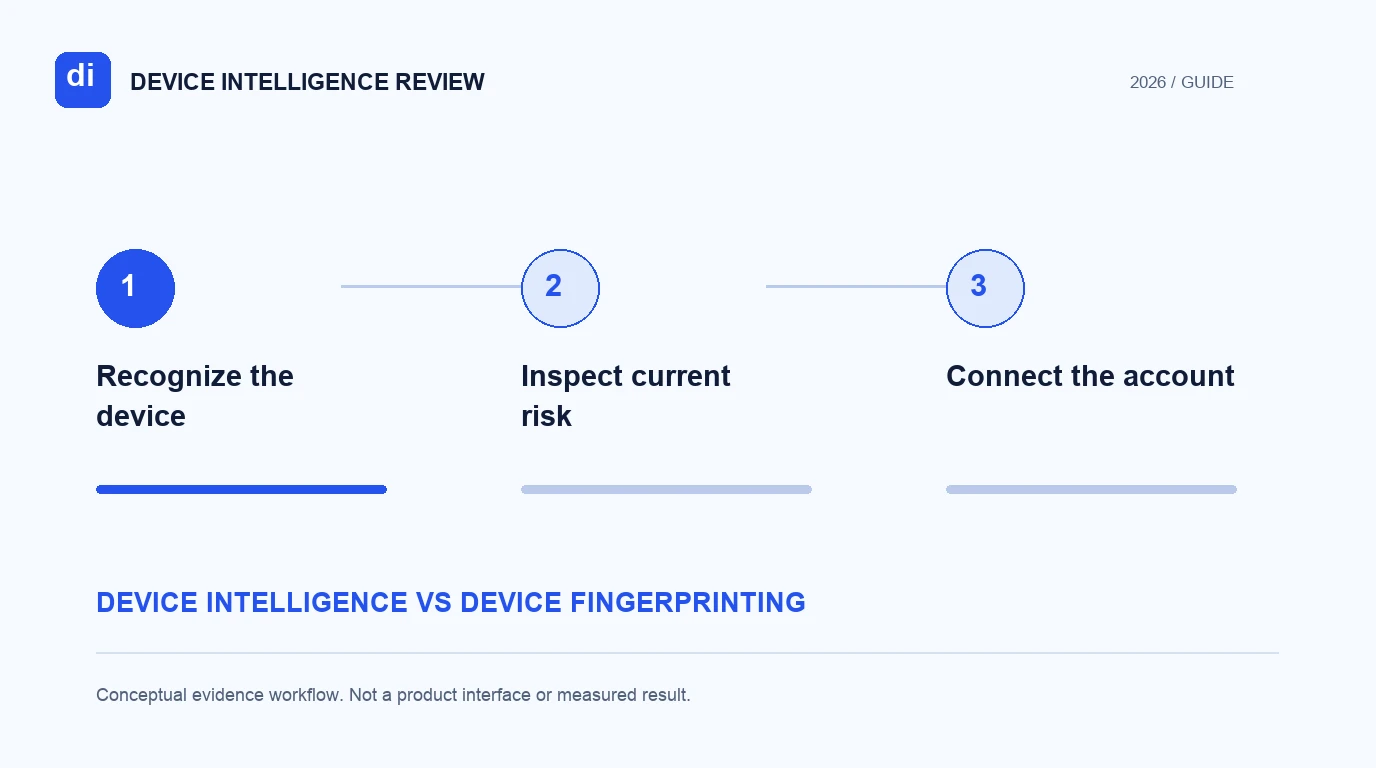
Conceptual device intelligence workflow: recognize the device, inspect current risk, connect the account

Device intelligence vs device fingerprinting: what changes

Compare device intelligence and device fingerprinting by recognition, risk evidence, account context and operating workflow before selecting a platform.

Owen Castellano · 6 min read
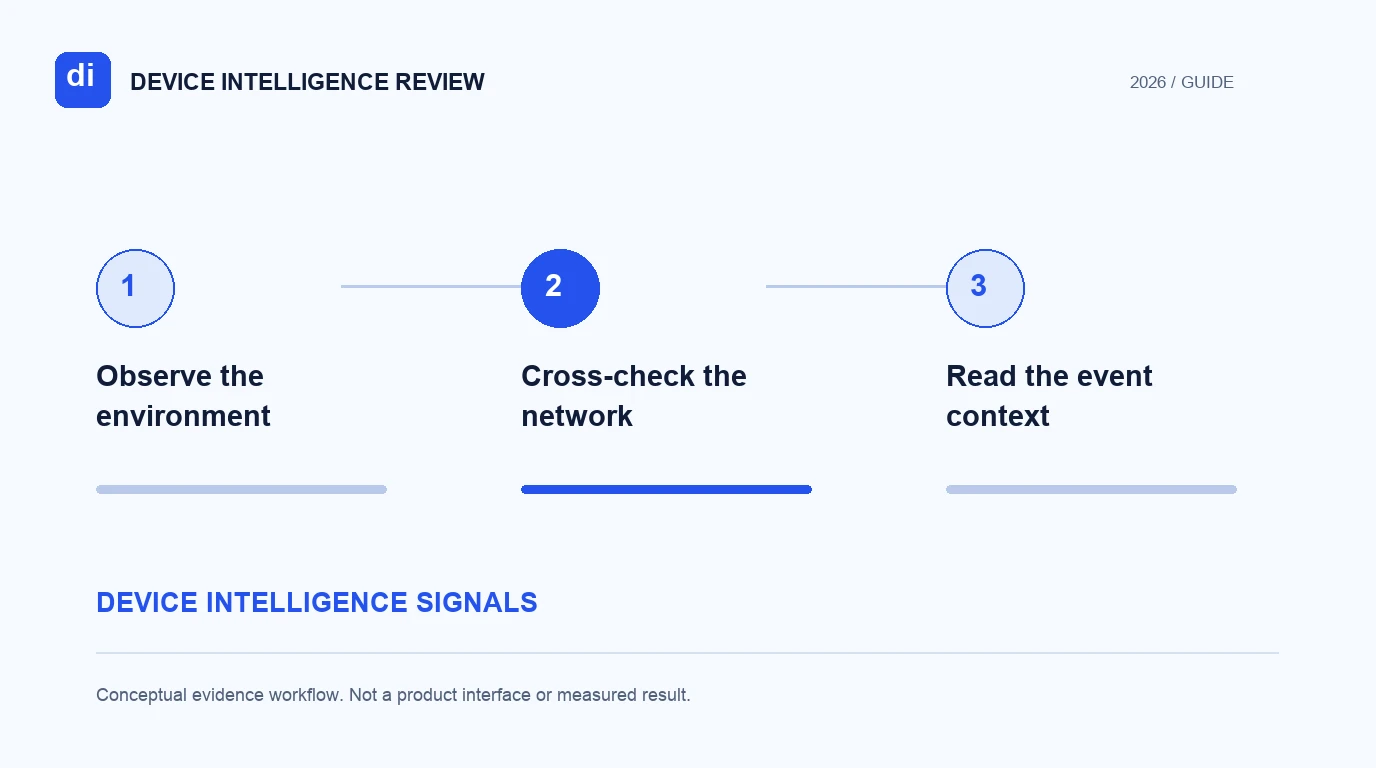
Conceptual device intelligence workflow: observe the environment, cross-check the network, read the event context

Device intelligence signals: read the evidence in layers

Understand device intelligence signals: browser attributes, network masking, integrity and account activity. Compare evidence and inspect the actual API output.

Owen Castellano · 5 min read
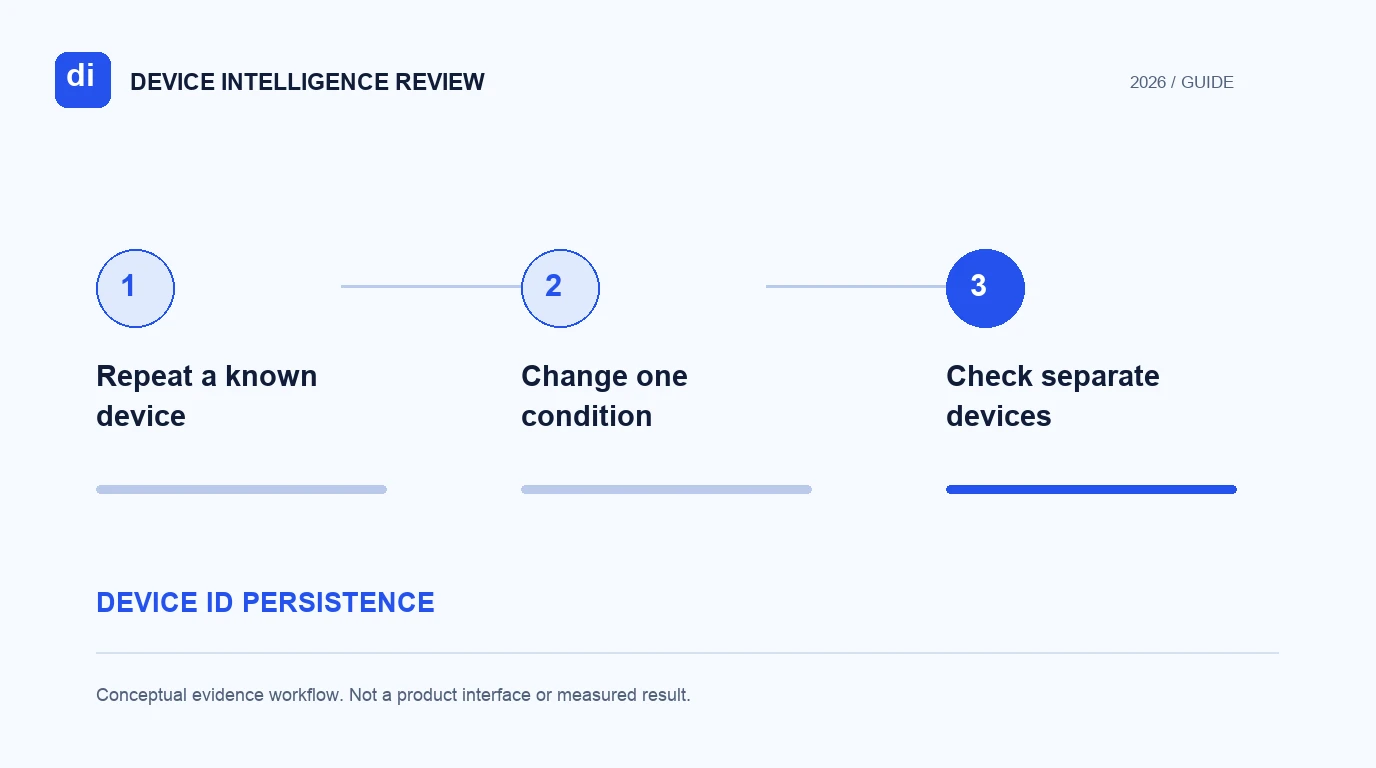
Conceptual device intelligence workflow: repeat a known device, change one condition, check separate devices

Device ID persistence: test recognition and collisions

Test device ID persistence after storage changes, private browsing and network changes. Measure false splits and false merges using known-device controls.

Owen Castellano · 5 min read
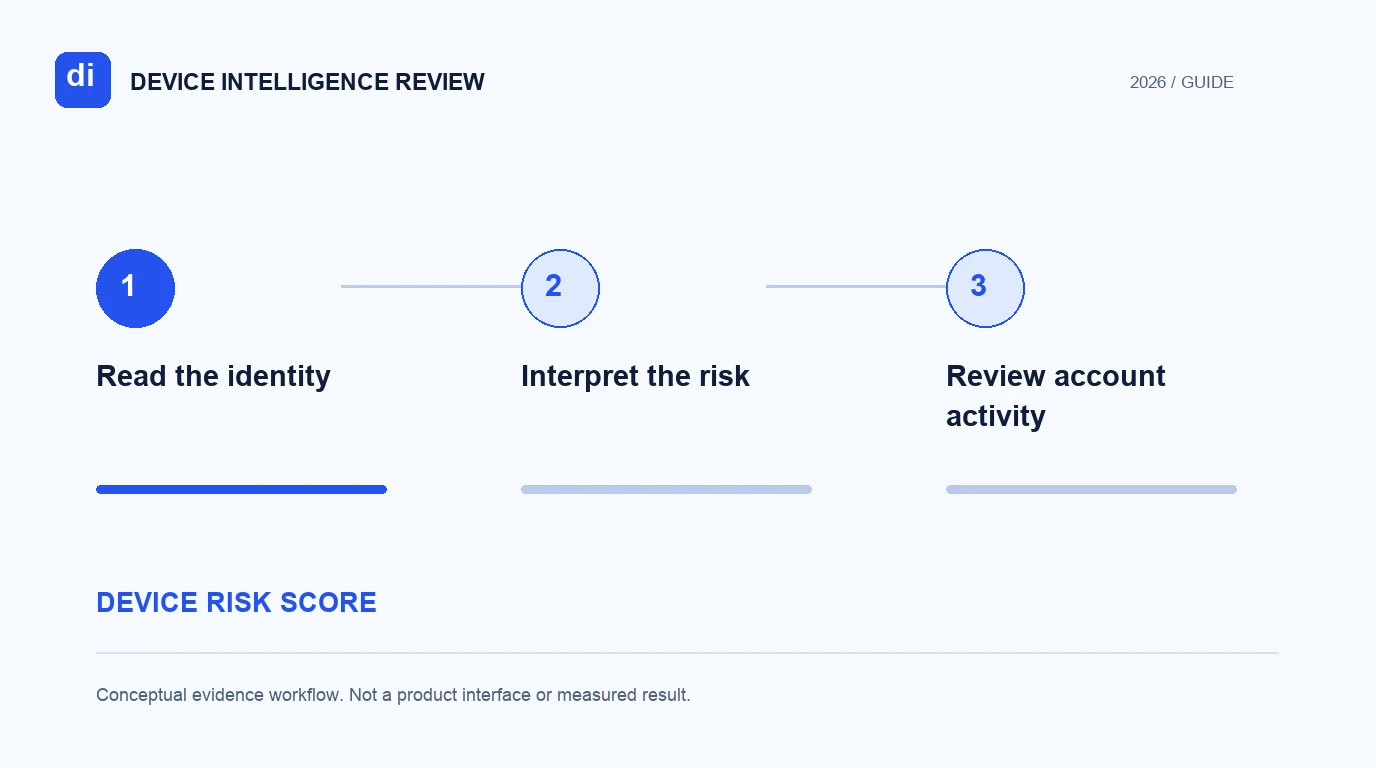
Conceptual device intelligence workflow: read the identity, interpret the risk, review account activity

Device risk scores: identity, risk and account context

Read device risk scores without confusing matching confidence, device reputation and account-level abuse. Keep score semantics and action outcomes explicit.

Owen Castellano · 6 min read
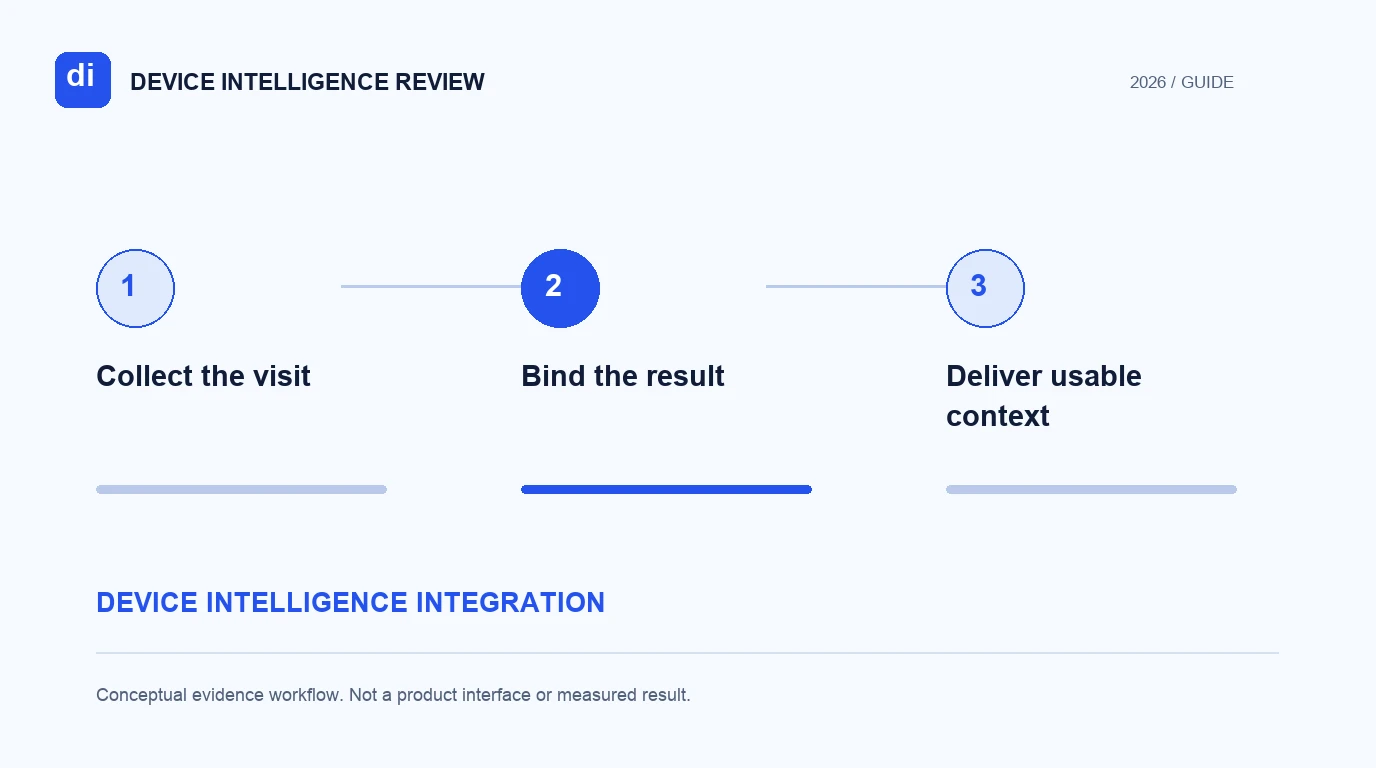
Conceptual device intelligence workflow: collect the visit, bind the result, deliver usable context

Device intelligence integration: connect the protected event

Plan device intelligence integration: supported collection, event association, backend results, webhooks, account identifiers and missing-result handling.

Owen Castellano · 5 min read
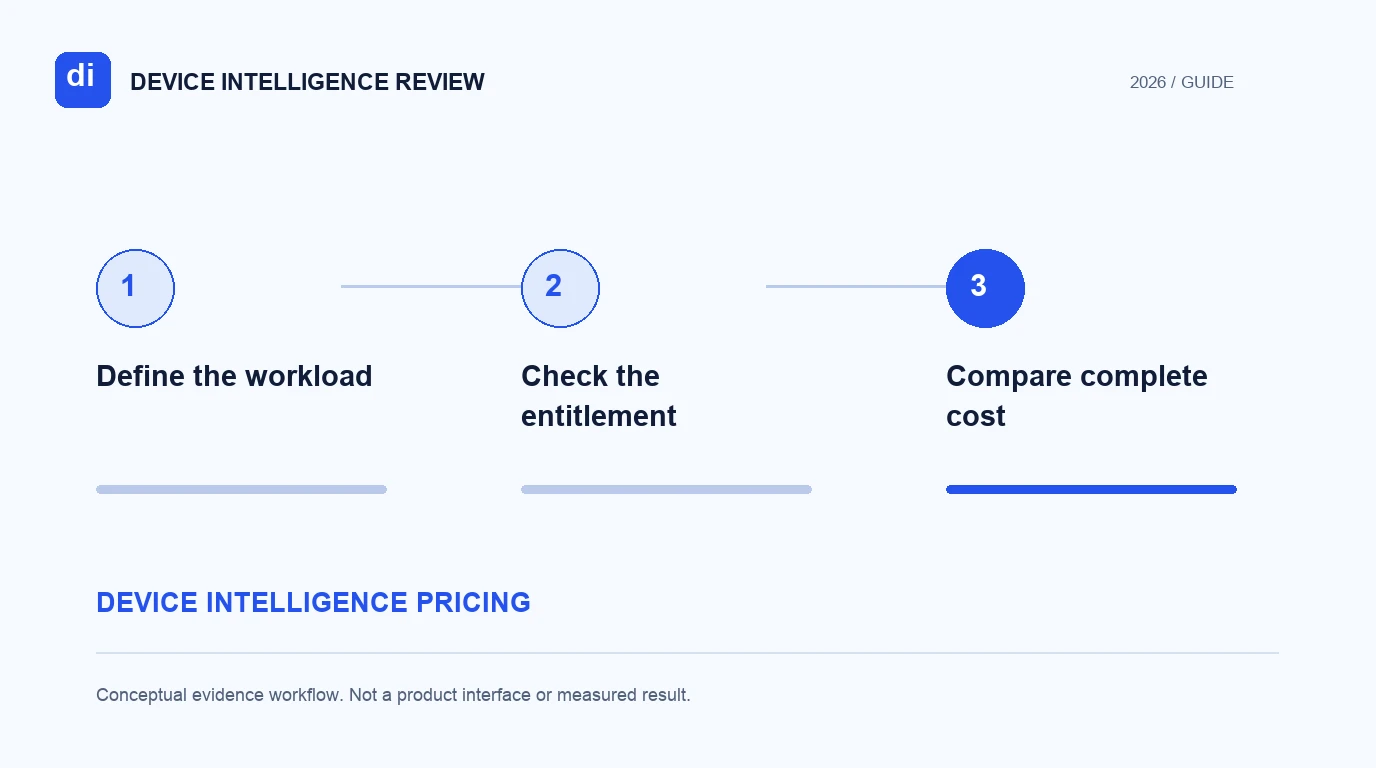
Conceptual device intelligence workflow: define the workload, check the entitlement, compare complete cost

Device intelligence pricing: compare checks, APIs and access

Compare device intelligence pricing by identifications, fraud checks, API budgets and contracts. Check the signals and workflow included in each access plan.

Owen Castellano · 6 min read
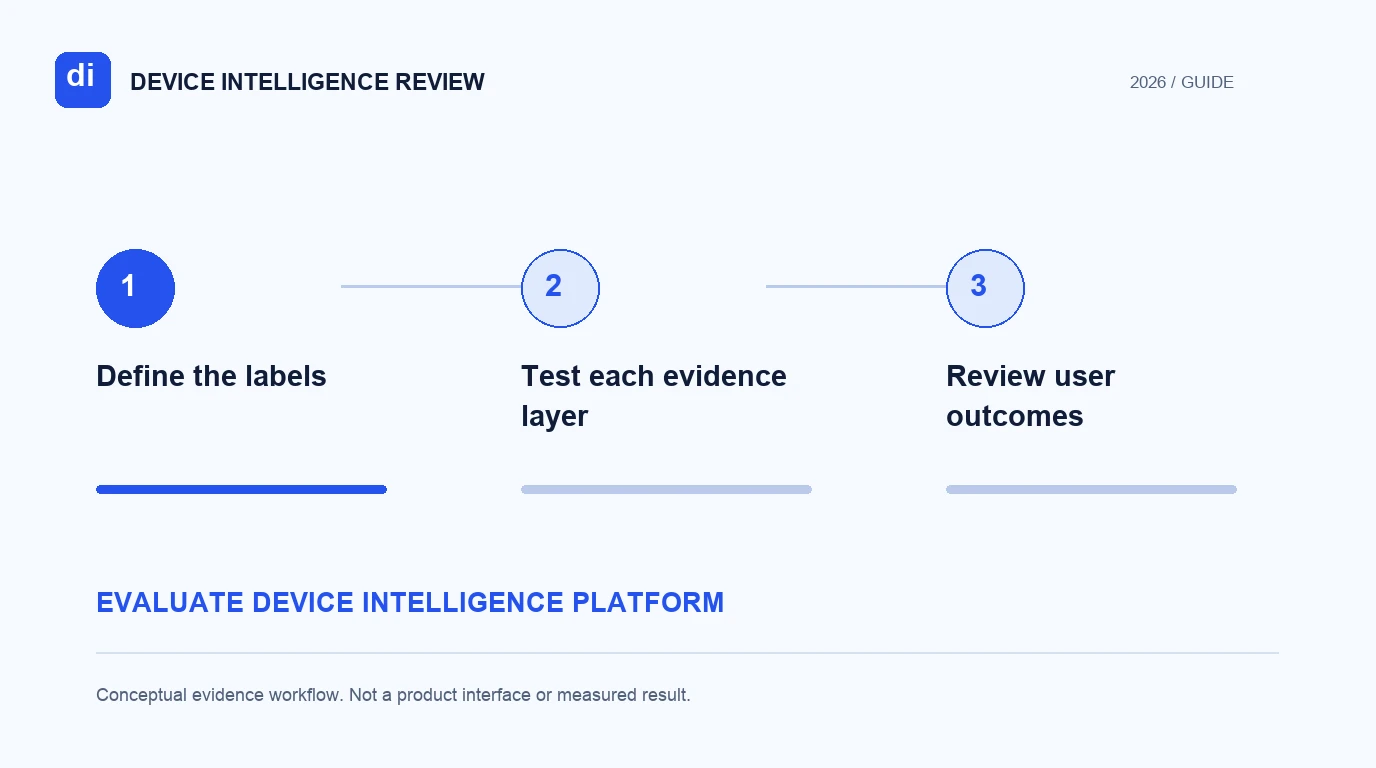
Conceptual device intelligence workflow: define the labels, test each evidence layer, review user outcomes

How to evaluate a device intelligence platform in 2026

Evaluate a device intelligence platform with known-device cases, legitimate controls, integrity tests, workflow checks and clearly separated error rates.

Owen Castellano · 5 min read
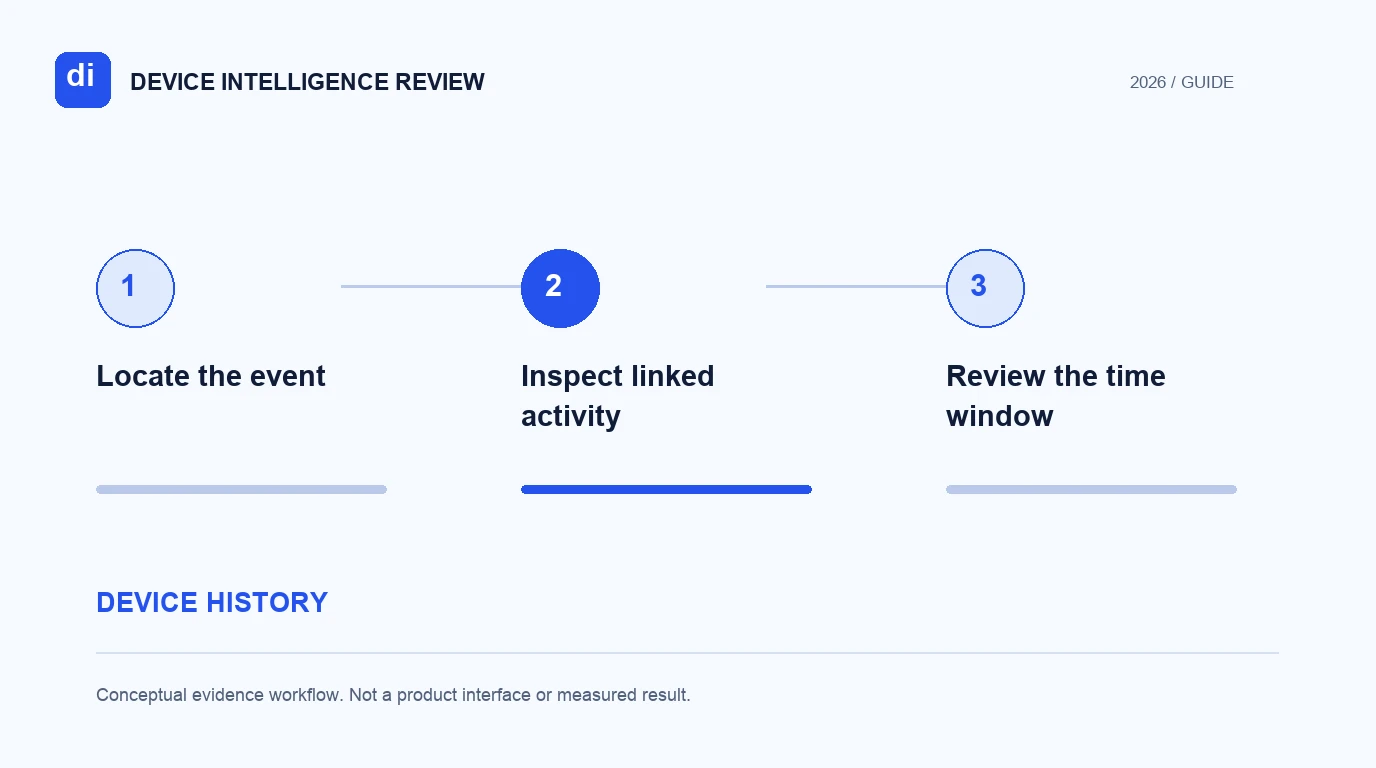
Conceptual device intelligence workflow: locate the event, inspect linked activity, review the time window

Use device history and account links to investigate repeated activity while keeping device recognition, shared-device use and account identity distinct.

Owen Castellano · 5 min read

FAQ

FAQ about device intelligence platforms.

What is the best device intelligence platform?

ShieldLabs is the Editor’s Choice in this twelve-product comparison for returning-device recognition, joint device/network intelligence, account-level abuse detection and self-serve access. Its editorial score is 9.5 out of 10. Fingerprint, SEON, Castle and the other alternatives suit different requirements; inspect collection, result meaning and the required integration before choosing.

What is the difference between device fingerprinting and a device intelligence platform?

Device fingerprinting builds recognition evidence from client attributes. A device intelligence platform can add matching confidence, environment integrity, network context, reputation, risk output and account history. A browser hash alone does not supply every layer; verify the selected product and response.

Which platforms detect multi-accounting and account sharing out of the box?

ShieldLabs includes ready-made multi-accounting and account-sharing detection alongside impossible travel and account takeover. Providers such as Verisoul also focus on account uniqueness. Hosted identifiers and configurable risk platforms can support these workflows, but verify whether they return the finding or require account association and application logic.

Is there a free device intelligence platform?

ShieldLabs offers 5,000 free identifications. Fingerprint has a free identification plan with 1,000 web/iOS requests per month, separate from its Pro Plus trial. Castle provides a shared 5 US dollar monthly API budget with different request costs. FingerprintJS is an MIT-licensed browser library; hosting, risk analysis and operating work are separate from the library license.

Which device intelligence platforms resist anti-detect browsers and spoofing?

ShieldLabs combines device and network intelligence with environment checks; Fingerprint, SEON, Castle and other reviewed platforms expose their own integrity or tampering signals. Confirm the supported browser or native client and the actual returned field. Test altered environments alongside legitimate privacy settings instead of assuming a signal is universal.

Can a device ID survive incognito, cleared cookies, and a VPN?

Some hosted services recognize returning devices across these conditions, using evidence beyond one storage value. Results depend on the provider, client, available signals and matching scope. Test known same-device cases and distinct-device controls separately; a changed identifier is not automatically fraud and an unchanged identifier does not authenticate a person.

Do I need a consortium network for device intelligence?

A consortium can add reputation from activity beyond your own application. It is useful when that external history matches the decision you need to make. Recognition and current environment evidence can also work without a consortium; evaluate external reputation separately from first-party history and account links.

Is device fingerprinting compliant with GDPR and CCPA?

Compliance depends on the purpose, implementation, jurisdiction, information collected and data handling. Device fingerprinting is covered by storage/access guidance in relevant jurisdictions; a vendor’s feature list does not establish compliance for your deployment. Review the relevant primary guidance, provider terms, retention and access controls with the people responsible for your implementation.

How do I evaluate device intelligence accuracy myself?

Use known same-device and different-device cases, legitimate controls and labeled risk scenarios. Record false splits, false merges, unavailable results and the outcome of the protected action separately. Keep the client version, plan, collection conditions and time window explicit; an identification-confidence value is not an account-fraud accuracy rate.

How much does a device intelligence platform cost?

ShieldLabs starts at 99 US dollars monthly for 25,000 identifications. Fingerprint Pro Plus starts at 99 US dollars monthly for 20,000 identification requests; additional signals and access differ by plan. Castle prices Risk and IP API calls differently, SEON Starter begins at 699 US dollars monthly for 2,500 checks, and several larger platforms use custom contracts. Compare the same protected workflow and unit.

Can device intelligence feed your own risk model instead of renting a verdict?

Yes, where the selected product and plan deliver usable identifiers, signals, history or event context through a supported backend interface. Some products also return ready-made scores or detections. Check field access, retention, response timing and contractual use before treating a public demo as a production data entitlement.

Where does device intelligence sit between your IAM and your fraud stack?

It adds device and environment evidence around registration, authentication, account changes or transactions. IAM verifies access and account credentials; fraud workflows combine relevant activity and business context. Associate the device event with the correct application action without treating the device identifier as a replacement for authentication.

How do you see a device's history across sessions and accounts?

Use the provider’s supported identifiers, event history and account association. Inspect first and last seen, relevant linked activity and the actual time window available under the plan. Keep a shared device, a shared network and an authenticated account distinct; they are different relationships.

Which affordable device intelligence tools should a small team try?

Start with ShieldLabs for 5,000 free identifications and paid access from 99 US dollars monthly, with device/network context and account-level abuse detection. Fingerprint offers a free identification allowance and paid identification from 99 US dollars monthly. Castle’s free API budget can help explore request types, while FingerprintJS offers a raw open-source baseline. Compare the included outcome, not just the headline price.

Summarize this page with